

Brickwork and blockwork services
- Brickwork for extensions and porches
- Blockwork for inner leaves, garages and outbuildings
- Garden walls and boundary walls
- Brick repairs and replacing damaged bricks
- Repointing
- Rebuilding chimneys and parapets
- Brick piers and pillars
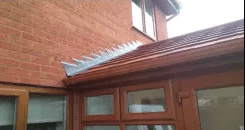
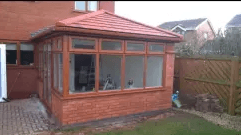
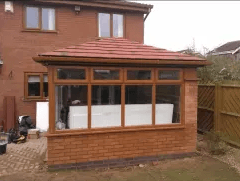
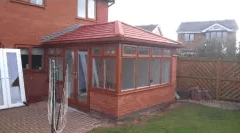
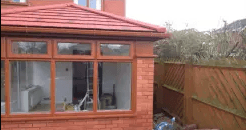
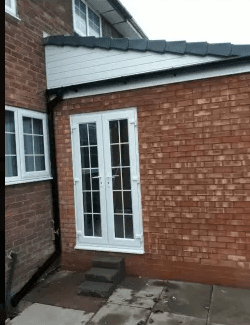
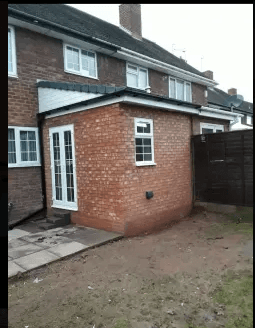
Brickwork for extensions
The outer leaf of brickwork is what everyone sees, so on an extension it needs to match the existing house as closely as possible. That means matching the brick colour, texture and size, the mortar colour and joint style, and the bond pattern. Many bricks used on older houses are no longer made, so finding a match can mean sourcing reclaimed bricks or the closest available modern equivalent.
Blockwork
Most modern walls are cavity walls, with an outer leaf of brick and an inner leaf of concrete block, separated by a cavity that usually contains insulation. Blockwork is also used for garages, outbuildings and internal walls. Different blocks have different strengths and insulating values, so the right block is chosen for the job and the building regulations requirements.
Cavity walls and wall ties
The two leaves of a cavity wall are tied together with wall ties built into the mortar joints. On new work, ties are spaced to the required pattern and the cavity is kept clear of mortar droppings, which can bridge the cavity and let damp across. On older houses, wall ties can corrode over time, which may show up as horizontal cracking in the mortar joints. That's something to have assessed.
Repointing
Mortar is designed to be the sacrificial part of a wall. Over time it erodes, and once the joints are recessed, water gets into the wall and frost can damage the bricks. Repointing involves raking out the old mortar to a suitable depth and refilling the joints with new mortar.
Choosing the right mortar matters. On older solid-wall properties, typically built before the 1920s, lime mortar is often the right choice because it lets the wall breathe. Hard cement mortar on soft, older bricks can trap moisture and cause the bricks to spall, or flake, instead of the mortar. Historic England's guidance on repointing makes the same point: the mortar should be weaker than the brick.
Garden and boundary walls
Garden walls need proper footings, a damp-proof course where needed, and coping to protect the top from rain. Taller walls and retaining walls need more careful design, as they have to resist wind and, for retaining walls, the pressure of soil. Planning permission may be needed for walls above certain heights, especially next to a road.
Chimneys and parapets
Chimneys and parapet walls are some of the most exposed brickwork on a house. Frost, rain and wind erode the mortar, and if pointing fails, water can get into the chimney and down into the roof space. Chimney repairs may involve repointing, replacing damaged bricks, rebuilding the top section of the stack, and renewing the flaunching that holds the pots. Because chimneys involve roofing as well as brickwork, they're well suited to a builder who also does roofing.
Lintels, the beams over windows and doors, are also part of brickwork. Cracking above a window or door is often a sign the lintel has failed. Replacing it involves temporary support and building the brickwork back in to match.
Areas we cover
We carry out bricklaying throughout Tamworth, including Amington, Wilnecote, Glascote, Belgrave, Dosthill, Fazeley, Bolehall, Kettlebrook, Hockley, Stonydelph and Two Gates.