

Why choose a uPVC door?
- Cost-effective compared with composite or aluminium doors
- Low maintenance, with no painting needed
- Good insulation and weather sealing
- Secure multi-point locking
- Available in white, colours and woodgrain finishes
- Matches uPVC windows for a consistent look
Panel doors and glazed doors
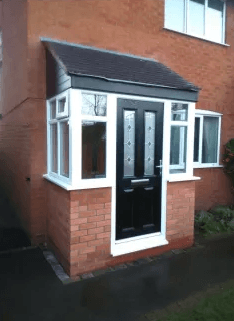
uPVC doors are typically made with a uPVC frame and a sash that holds either an insulated panel, glass or a combination of both. Many uPVC front doors use decorative panels with glazing options, while back doors are often fully or half glazed to bring light into kitchens and utility rooms. Glass in doors must be safety glass, and it can be clear, obscure or decorative.
Where uPVC doors work best
uPVC doors are a popular choice for back doors, side doors and utility rooms, and for front doors where budget is a priority. On a main front door, many homeowners choose composite for its appearance and strength, but a good-quality uPVC door with a modern panel and secure hardware is still a reliable option. uPVC is also used widely for stable doors and for doors in porches and conservatories.
Security
Modern uPVC doors use multi-point locks with hooks, rollers or bolts that engage along the frame, plus secure hinges. The cylinder is the most important part: an anti-snap cylinder tested to a recognised standard, such as TS 007 3-star, is designed to resist lock snapping. Doors tested to PAS 24 have been tested against a range of physical attacks. Ask about the lock, cylinder and test standard when choosing a door.
Building regulations
Replacement external doors in England fall under the building regulations energy efficiency requirements in Approved Document L, which sets a maximum U-value of 1.4 W/m²K for replacement doors in existing homes, or an equivalent minimum Doorset Energy Rating. Glazing in doors must be safety glass. As with windows, compliance is usually shown either through an installer registered with a competent person scheme, such as FENSA or Certass, or by notifying building control. A new door also shouldn't make access to the house worse than before, so threshold heights matter.
Colours and finishes
White uPVC is the most common finish, but uPVC doors are also available in colours such as anthracite grey, black, cream and green, as well as woodgrain foils that replicate oak or rosewood. Colours are usually created using foils bonded to the profile. Matching the door colour to your windows creates a consistent look.
Maintaining a uPVC door
uPVC doors need little maintenance: clean the frame with mild soapy water, keep the threshold drainage clear and lubricate the lock and hinges occasionally. If the door starts to drop or catch, have it adjusted early. Forcing a stiff handle is one of the most common causes of broken multi-point lock mechanisms.
uPVC doors for porches and conservatories
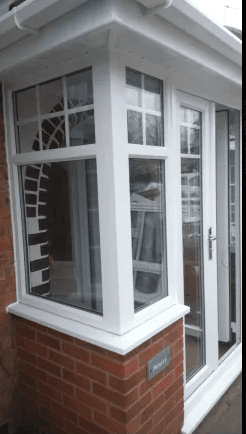
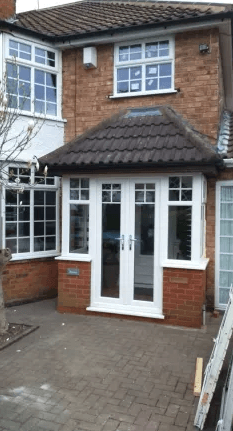
uPVC doors are widely used in porches, conservatories and garden rooms, where they match the surrounding uPVC frames. In a porch, a uPVC or composite outer door can work alongside your existing front door, adding security and a buffer against the weather. In conservatories, uPVC French doors or single doors are a common choice for garden access.
Choosing the right glass
Glass in uPVC doors must be safety glass, usually toughened or laminated. Clear glass maximises light, while obscure glass gives privacy in hallways and bathrooms. Decorative glass options include bevelled, leaded and patterned designs. Laminated glass is a good choice where security matters, as it holds together if broken.
Back and side doors
Back and side doors often get more everyday use than the front door, especially when they lead to the garden, driveway or utility room. A half-glazed uPVC door lets light into a kitchen or utility, while a solid panel door gives more privacy in a side passage. A secure lock and anti-snap cylinder are just as important on a back door as on the front.
Areas we cover
We fit uPVC doors throughout Tamworth, including Amington, Wilnecote, Glascote, Belgrave, Dosthill, Fazeley, Bolehall, Kettlebrook, Hockley, Stonydelph and Two Gates.