

Leadwork we carry out
- Chimney flashings, including front aprons, back gutters and step flashings
- Abutment flashings where a roof meets a wall
- Lead soakers under tiles and slates
- Lead valleys and valley replacement
- Leadwork around dormers and bay windows
- Repairs to split, lifted and stolen lead
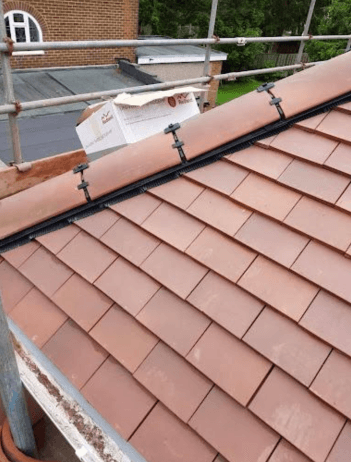
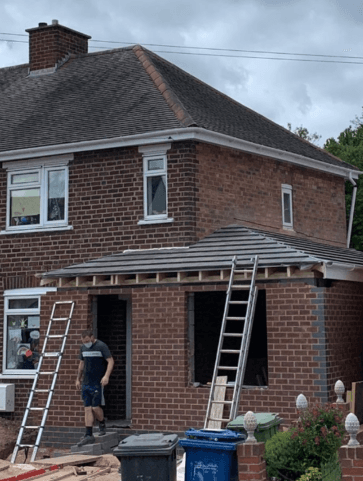
Why leadwork fails
Lead is durable, but it fails when it's installed badly. The most common faults we find are pieces that are too long, so thermal expansion and contraction eventually split them, lead that hasn't been properly tucked into the mortar joint and has pulled out of the wall, mortar pointing that has cracked away, and lead that has been too thin for the job. Sealant smeared over a failing flashing is another common sight, and it rarely lasts more than a season or two.
Getting the detail right
Rolled lead sheet is made in different thicknesses, known as codes, and each part of a roof needs an appropriate code. Thinner codes are used for soakers, while flashings, valleys and gutters need heavier lead. Each piece needs to be cut to a suitable length so it can move with temperature changes, fixed so it can't lift in the wind, and dressed to the shape of the roof so water runs off rather than sitting behind it.
New lead can leave white streaks on brickwork and tiles as it weathers. Applying patination oil after installation helps prevent this.
Chimney flashings
Chimneys are one of the most common sources of roof leaks because they need several pieces of leadwork working together: an apron at the front, step flashings and soakers down the sides, and a back gutter behind. If any part fails, water can run down inside the roof. We inspect the whole chimney detail, not just the piece that looks worst, because the source of the leak is often somewhere else.
Roof valleys
A valley carries the water from two roof slopes, so it handles more water than any other part of the roof. Valleys can be lined with lead, formed with dry valley systems or laid with valley tiles. Older lead valleys can split, and valleys of all types can become blocked with moss and debris, causing water to overflow under the tiles. Replacing a valley means lifting the tiles either side, renewing the lining and relaying the tiles.
Lead theft
Lead has scrap value and is sometimes stolen from roofs, particularly from bay windows, porches and outbuildings that can be reached easily. Stolen lead leaves the roof open to the weather, so it needs replacing quickly. Lead-free alternatives exist for some details and have little or no scrap value, and they can be a sensible choice where theft is a concern.
Leadwork alongside other roof work
Leadwork is often renewed as part of a larger job, such as a re-roof, a chimney repair or a new roof window. Doing it at the same time means the tiles only need lifting once and the scaffolding is already in place. If you're having work done on your roof, it's worth asking for the condition of the leadwork to be checked as well.
Areas we cover
We carry out roofing leadwork across Tamworth, including Amington, Wilnecote, Glascote, Belgrave, Dosthill, Fazeley, Bolehall, Kettlebrook, Hockley, Stonydelph and Two Gates.