
Window styles we fit
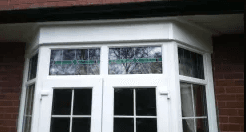
Casement windows are the most common style in UK homes, with sashes hinged at the side or top. They're versatile, practical and suit most properties. Flush casement windows have sashes that sit level with the frame rather than protruding, which gives a cleaner, more traditional look, similar to timber windows of the past.
Tilt and turn windows open inwards in two ways: they tilt from the bottom for ventilation or swing open like a door for cleaning and escape. They're popular on modern homes and upper floors. Sliding windows, including horizontal sliders, suit openings where outward-opening sashes would be in the way. French windows are a pair of casements opening outwards with no central mullion, giving a wide, clear opening. Cottage-style windows use bars and smaller panes to suit period and rural properties.
Glass options
- Low-emissivity (low-e) double glazing for energy efficiency
- Triple glazing for higher thermal and acoustic performance
- Obscure and frosted glass for bathrooms and privacy
- Toughened and laminated safety glass where required
- Acoustic glass for homes near busy roads
- Solar control glass for south-facing rooms
Frames and finishes
Windows are available in uPVC, aluminium, timber and composite frames. Colours go well beyond white, with grey, anthracite, black, cream and woodgrain finishes, and many frames can have a different colour inside and out. Coloured windows can update the look of a house considerably, especially when matched to new doors and rooflines.
What energy ratings mean
Windows are rated in two ways. The U-value measures how much heat passes through the whole window, frame included, and lower is better. The Window Energy Rating, or WER, rates a window from A++ down to E, taking into account heat loss, solar gain and air leakage. An A-rated window performs better than a B-rated one, though the difference in heating bills depends on your home and what you're replacing. Ask for the U-value or WER in writing for any window you're quoted.
Building regulations for replacement windows
Replacing a window in England is controlled work under the building regulations. Since June 2022, Approved Document L has required replacement windows in existing homes to achieve a whole-window U-value of 1.4 W/m²K or better, or a Window Energy Rating of band B or better. Compliance is usually shown in one of two ways: the installer is registered with a government-approved competent person scheme, such as FENSA or Certass, and self-certifies the work, or the installation is notified to building control. Either way, you should receive a certificate, which you'll need when you sell the house.
Ventilation rules changed at the same time. Under Approved Document F, if your existing windows have trickle vents, the replacements should include them too, and where they don't, the new windows shouldn't leave the room less ventilated than before. In practice, that means trickle vents are now fitted to most replacement windows. Bedroom windows that serve as escape routes in a fire must also keep an adequate opening size.
Safety glass
Building regulations also require safety glass in certain positions, known as critical locations, where people are more likely to collide with glass. These include glazing close to floor level and glazing in or next to doors. Bathrooms, stairways and large panes are common places where toughened or laminated glass is needed.
The installation matters
A good window can perform badly if it's poorly fitted. The frame needs to be fixed securely, packed level and square, and sealed properly to the wall so there are no gaps for draughts or water. The cavity at the edge of the opening needs closing, and the internal and external finishes should leave a neat job. We remove the old windows carefully, protect your home while we work, and take the old frames away.
Areas we cover
We fit double glazing throughout Tamworth, including Amington, Wilnecote, Glascote, Belgrave, Dosthill, Fazeley, Bolehall, Kettlebrook, Hockley, Stonydelph and Two Gates.