

Signs your roof may need replacing
- Tiles failing across the whole roof, not just in one area
- Leaks appearing in several places, or coming back after repairs
- Old bitumen felt in the loft that has torn, sagged or turned brittle
- Battens that are rotten or have lost their grip on the nails
- Widespread nail fatigue, where tiles slip because the fixings have corroded
- A noticeable dip or sag in the roofline
Not every older roof needs replacing. If the problems are confined to one area, a repair or partial re-roof may be the better value option, and we'll tell you if that's the case.
What a roof replacement involves
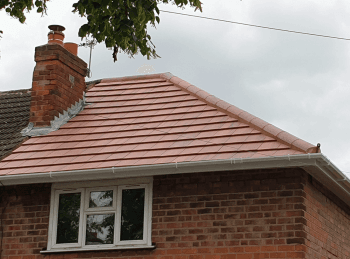
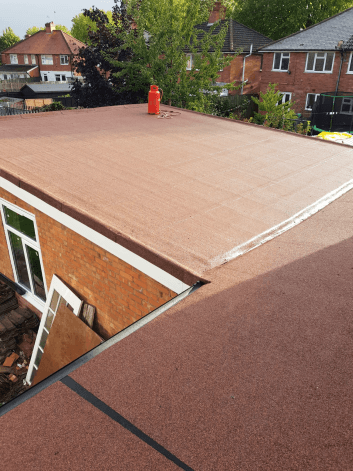
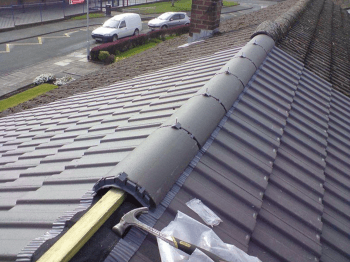
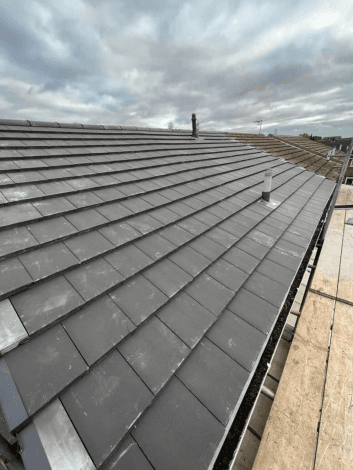
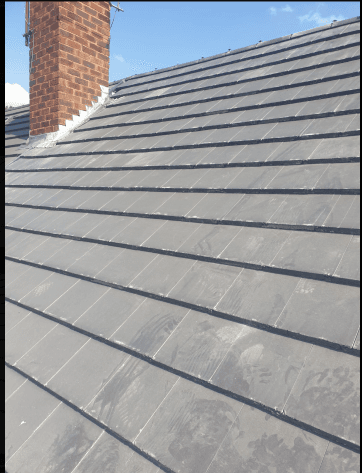
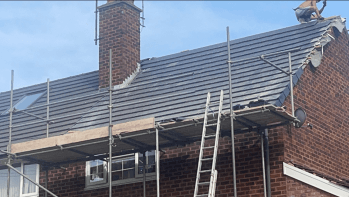
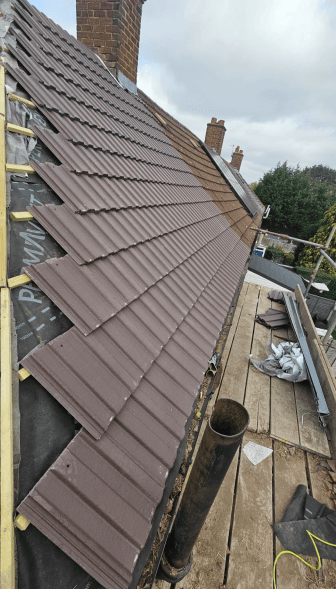
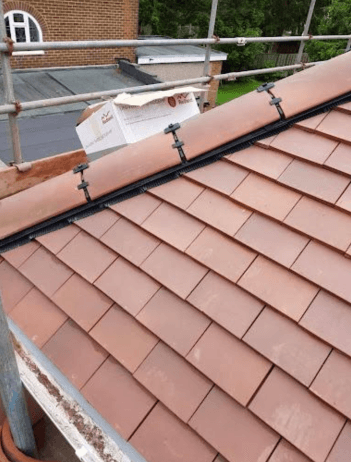
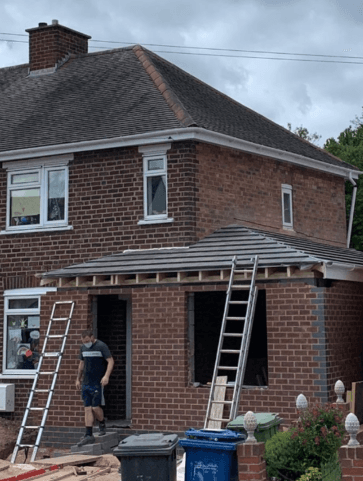
After scaffolding goes up, the old tiles, battens and felt are stripped and the rafters are inspected. Damaged timber is repaired or replaced. A new breathable membrane is laid, new treated battens are fixed at the right gauge for the chosen tile, and the tiles or slates are fixed in line with the manufacturer's requirements and BS 5534, the British Standard for slating and tiling. Ridges, hips and verges are mechanically fixed, and leadwork, valleys and roofline details are renewed or reinstated as part of the job.
Choosing your roof covering
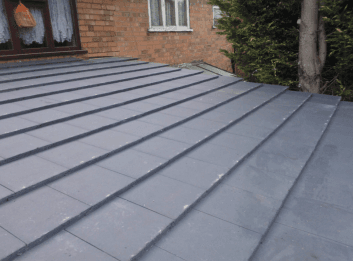
Concrete interlocking tiles are the most common covering in Tamworth, particularly on houses built during the town's post-war expansion. They're cost-effective and relatively quick to lay. Clay tiles have a longer track record and a more traditional appearance, and natural slate suits older properties and some modern designs.
Changing material isn't just about appearance. A heavier covering puts more load on the roof structure, and different tiles need different minimum pitches. We'll check that your chosen covering suits your roof before you commit.
Building regulations
Most full re-roofs need building regulations approval. The Planning Portal states that re-roofing an existing building will need approval in most situations, and that because a roof is a thermal element, re-covering it should include improving its insulation. Approval is also likely to be needed if you change to a covering that is significantly heavier or lighter, as the roof structure may need checking.
This is handled either through your local building control service or by a roofer registered with a government-approved competent person scheme, who can self-certify the work. Either way, you should receive confirmation that the work complies, which you'll want when you sell the house.
Ventilation and condensation
Older roofs often have bitumen felt that lets very little moisture through. When a roof is replaced, adding insulation and an airtight membrane without thinking about ventilation can trap moisture in the loft and lead to condensation. We plan ventilation as part of the job, using the membrane, ventilated ridges and eaves ventilation as appropriate to your roof.
Refurbishment and partial re-roofing
If only one slope is failing, or the tiles are sound but the battens and felt are not, a partial re-roof or a strip-and-relay using the existing tiles may be possible. This can be a good option on roofs where the tiles have plenty of life left. We'll be honest about whether it's worth doing on your roof.
Areas we cover
We replace roofs across Tamworth, including Amington, Wilnecote, Glascote, Belgrave, Dosthill, Fazeley, Bolehall, Kettlebrook, Hockley, Stonydelph and Two Gates.