
Roofline services we offer
- Complete roofline replacement: fascias, soffits, bargeboards and guttering
- uPVC fascia and soffit installation
- Replacing rotten or damaged timber fascias with uPVC
- Fascia and soffit repairs
- Ventilated soffits and over-fascia ventilation
- Eaves protection trays where the felt has rotted at the eaves
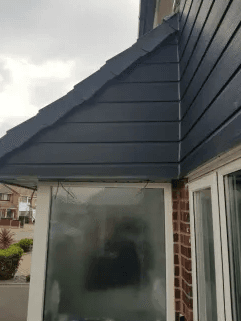
- Bargeboards and dry verge at gable ends
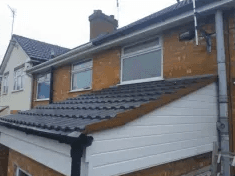
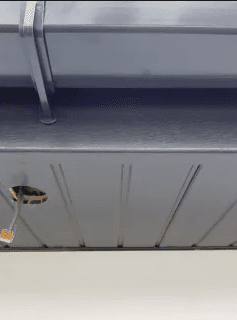
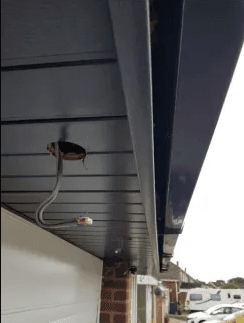
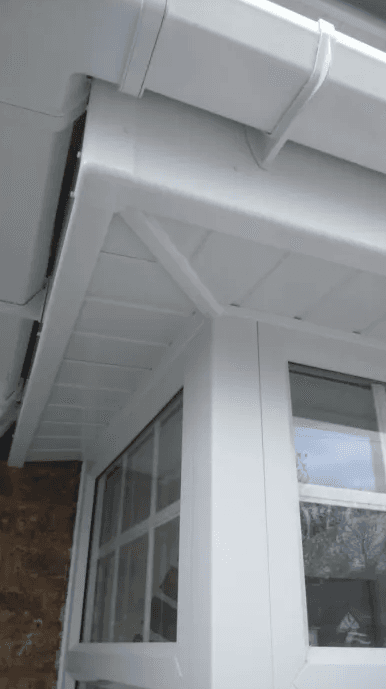
Signs your roofline needs attention
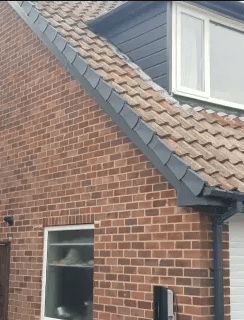
Timber fascias and soffits show their age with flaking paint, soft or rotten patches, and boards that have split or come away from the rafters. On uPVC rooflines, look for boards that have sagged, discoloured or cracked, joints that have opened up, and gutters that no longer sit level. Damp patches on the walls just below the eaves, birds or wasps getting into the roof, and gutters that overflow even when they're clear can all point to a roofline problem.
Full replacement, not capping over
Some installers fit thin uPVC boards straight over the old timber, a method known as capping or cladding. It's quicker and cheaper, but if the timber underneath is already damp or rotten, covering it traps the moisture and the rot keeps spreading out of sight. The fixings for the gutters then rely on decaying wood.
Our standard approach is full replacement. We remove the old fascias and soffits, check the rafter ends, repair any rotten timber, and fit new solid uPVC fascia boards fixed directly to the rafters. Where capping is genuinely suitable, for example over sound timber, we'll explain the difference so you can choose with the full picture.
Ventilation at the eaves
A roof space needs air moving through it to keep condensation down. In many homes, air enters at the eaves and leaves at the ridge or high level. When rooflines are replaced, ventilation can be built in using vented soffits or over-fascia vents, which help stop the loft from becoming damp. Ventilation should be balanced with the loft insulation so the insulation doesn't block the airflow at the eaves.
Eaves protection
On older roofs, the bitumen felt where it overhangs into the gutter often rots away, leaving a gap where water runs onto the fascia instead of into the gutter. Replacing a roofline is a good time to fit eaves protection trays, which lift the bottom row of tiles slightly and carry water cleanly into the gutter. It's a small addition that solves a very common source of rot and damp.
Bats and nesting birds
Bats often roost behind fascias and soffits or use gaps there to get into the roof. All British bats and their roosts are protected by law, whether or not bats are present at the time. If we find signs of bats, work in that area stops and specialist advice is taken, usually through the National Bat Helpline or Natural England, before going any further. Active birds' nests are also protected, so timing matters if birds are nesting in your eaves.
Choosing your roofline
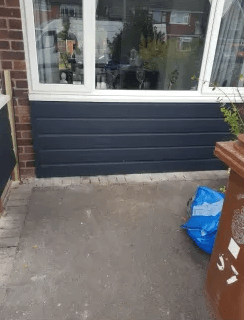
White uPVC is the most common choice, but rooflines are also available in colours and woodgrain finishes that suit modern and traditional homes. Black, grey and anthracite rooflines are popular on houses with matching windows. The fascia, soffit and guttering colours can be matched or deliberately contrasted. We'll show you the options that suit your property.
Roofline and the rest of your roof
Because we're roofers as well as roofline installers, we can deal with what's found behind the boards: rotten rafter ends, failed felt at the eaves, loose bottom-row tiles and dry verge at the gables. If your roof is due for replacement in the next few years, it can make sense to do both together while the scaffolding is up.
Areas we cover
We fit fascias and soffits throughout Tamworth, including Amington, Wilnecote, Glascote, Belgrave, Dosthill, Fazeley, Bolehall, Kettlebrook, Hockley, Stonydelph and Two Gates.