

What is a composite door?
A composite door is made from several materials bonded together. Most have a tough outer skin, usually glass reinforced plastic (GRP), moulded with a woodgrain texture, over an insulated core. The core may be a rigid foam or solid timber, depending on the manufacturer. The door slab is fitted into a frame, often uPVC or aluminium, with a multi-point lock and adjustable hinges.
Why choose a composite door?
- Strong, impact-resistant construction
- Good thermal insulation from the insulated core
- Realistic woodgrain appearance without the maintenance of timber
- Resistant to warping, rotting and fading in normal conditions
- Wide range of styles, colours and glazing options
- Secure multi-point locking systems
Foam core or timber core?
Composite doors are made with different core materials. Foam cores insulate well and keep the door lighter. Solid timber cores are heavier and feel more substantial. Each manufacturer claims advantages for its own construction, and quality varies within both types. Rather than focusing on the core alone, look at the door's tested security, its U-value or energy rating, the quality of the hardware and the guarantee.
Styles and colours
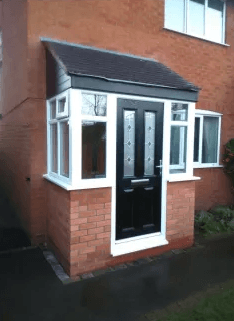
Composite doors come in traditional, cottage and contemporary designs, with a choice of glazing, from solid doors with no glass to doors with decorative or obscure glass panels. Popular colours include black, anthracite grey, blue, red, green and cream, and many doors are available in a different colour inside. Side panels, toplights, letterplates, knockers and handles can all be chosen to suit your home.
Security
The security of a composite door comes from the whole doorset: the slab, the frame, the multi-point lock, the hinges and the cylinder. Anti-snap cylinders protect against lock snapping, a common method of attack on standard euro cylinders. Doors tested to PAS 24 have been tested against a range of attacks, and Secured by Design accreditation shows a product has met police-backed security requirements. Ask what standards the door meets before you buy.
Building regulations
Replacement external doors in England fall under the building regulations energy efficiency requirements in Approved Document L, which sets a maximum U-value of 1.4 W/m²K for replacement doors in existing homes, or an equivalent minimum Doorset Energy Rating. Glazing in doors must be safety glass. As with windows, compliance is usually shown either through an installer registered with a competent person scheme, such as FENSA or Certass, or by notifying building control. A new door also shouldn't make access to the house worse than before, so threshold heights matter.
Looking after a composite door
Composite doors need very little maintenance. Clean the door and frame with warm soapy water a few times a year, avoiding abrasive cleaners and solvents, which can damage the finish. Lubricate the lock and hinges occasionally, and if the door starts to catch or the handle becomes stiff, get it adjusted before the mechanism is damaged.
Composite doors for period homes
Composite doors are available in traditional designs that suit Victorian, Edwardian and cottage-style homes, with panel layouts, glazing patterns and hardware chosen to match the period. Heritage colours such as deep greens, blues and black work well on older properties. On listed buildings and in some conservation areas, timber may still be required, so check before ordering.
Fitting a composite door
Composite doors are made to measure for your opening. The old door and frame are removed, the opening is checked and repaired if needed, and the new doorset is fixed level and square and sealed to the wall. The hinges and keeps are adjusted so the door closes smoothly and the lock engages without force. Correct installation is what makes a good door perform well.
Areas we cover
We fit composite doors throughout Tamworth, including Amington, Wilnecote, Glascote, Belgrave, Dosthill, Fazeley, Bolehall, Kettlebrook, Hockley, Stonydelph and Two Gates.