

Roof repairs we carry out
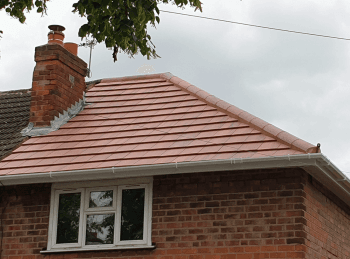
- Replacing slipped, cracked and missing tiles and slates
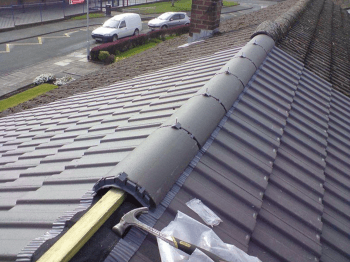
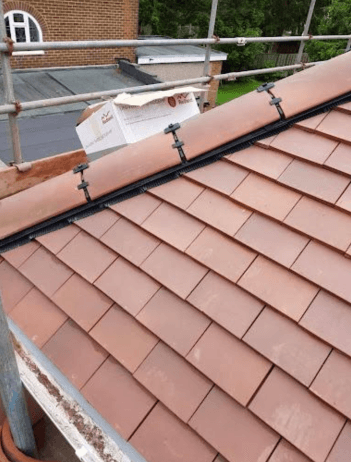
- Re-fixing or replacing ridge and hip tiles, including dry ridge systems
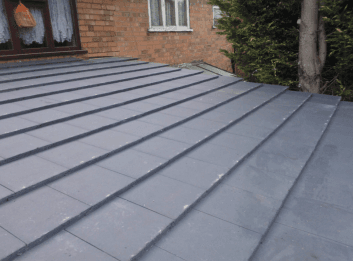
- Leadwork and flashing repairs around chimneys, walls and abutments
- Valley repairs and replacements
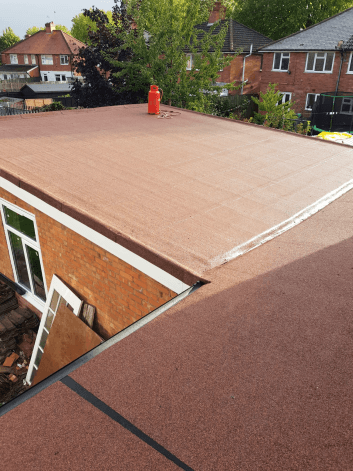
- Flat roof repairs to felt and GRP roofs
- Storm damage repairs after high winds
- Leak detection where the source isn't obvious
- Repairs to fascias, soffits and guttering that are letting water in
Finding the leak before fixing it
Water travels. It can enter at a cracked tile near the ridge, run down the membrane and drip into your bedroom several metres away from the actual fault. That's why a patch over the wet spot often doesn't work. We inspect the roof from outside and, where we can, from inside the loft, looking for daylight, staining on the timbers and the route the water has taken.
The most common causes we find on Tamworth roofs are slipped or broken tiles, cracked mortar on ridges and verges, worn or poorly dressed lead flashing, blocked or failed valleys, and flat roofs where the covering has split or the upstands have pulled away from the wall.
Repair or replace?
Most roofs can be repaired, and we'll tell you if yours can. A roof is usually worth repairing when the problem is localised: a handful of tiles, one valley, a section of flashing. It may be time to think about replacement when tiles are failing across the whole roof, when the battens and membrane underneath have deteriorated widely, or when you're paying for repeated repairs in different places.
If we think replacement is the better long-term option, we'll explain why and show you what we've found. If a repair will do the job, that's what we'll recommend.
Roofs common in Tamworth
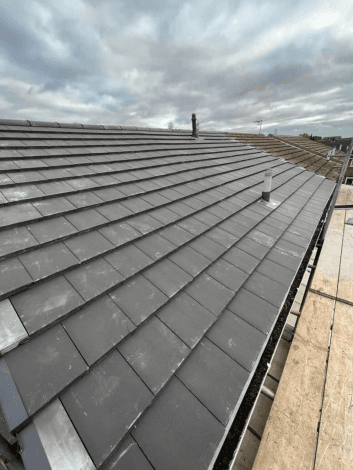
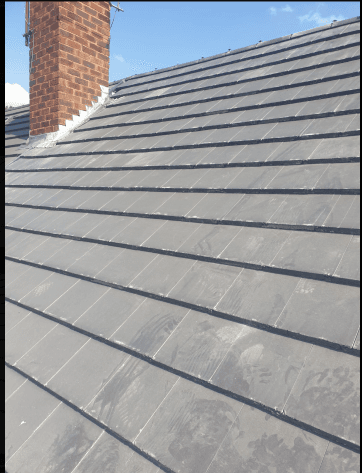
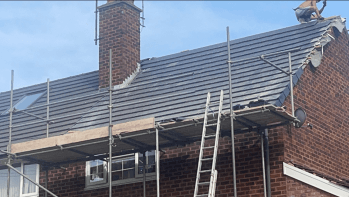
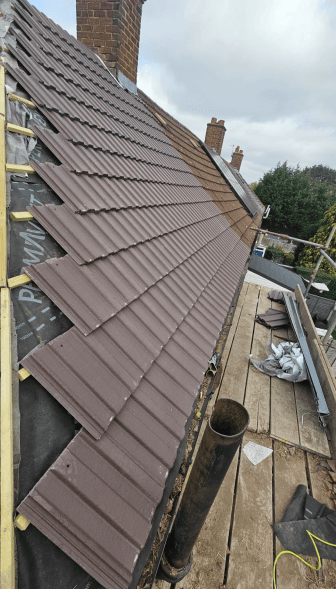
A large share of Tamworth's housing was built during the town's post-war expansion, so many of the roofs we see are covered in concrete interlocking tiles on estates such as Belgrave, Stonydelph, Glascote and Amington. Older properties near the town centre are more likely to have clay or natural slate roofs. Each needs different materials and fixing methods, and replacement tiles need to match the existing profile so the roof stays weathertight.
Storm damage
High winds tend to lift tiles at the edges of the roof, at the verges, ridges and eaves, because that's where wind pressure is greatest. If tiles have come down after a storm, keep clear of the area below the roof and get it checked before the next spell of rain. If you plan to claim on your home insurance, take photos of the damage before any work starts and check your policy, as insurers set their own definitions of what counts as storm damage.
A common myth: a mortar ridge is always the right fix
For many years ridge tiles were simply bedded on mortar. The current British Standard for slating and tiling, BS 5534, says mortar should not be relied on as the only means of fixing ridge and hip tiles, so they need mechanical fixings as well. Existing mortar ridges don't have to be changed just because the standard has moved on, but when we re-bed or replace a ridge we fix it to the current standard.
Areas we cover
We carry out roof repairs throughout Tamworth, including Amington, Wilnecote, Glascote, Belgrave, Dosthill, Fazeley, Bolehall, Kettlebrook, Hockley, Stonydelph and Two Gates.