

What counts as a roofing emergency
- Water actively coming into the house through a ceiling or around a light fitting
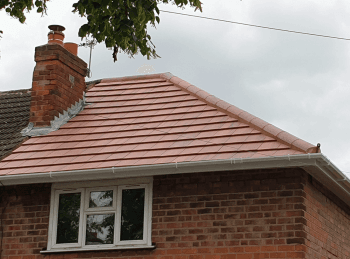
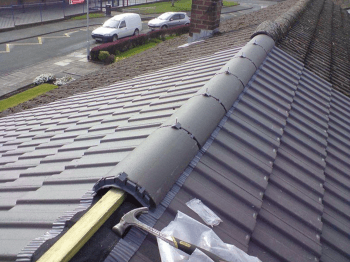
- Tiles, slates or ridge tiles blown off or hanging loose after high winds
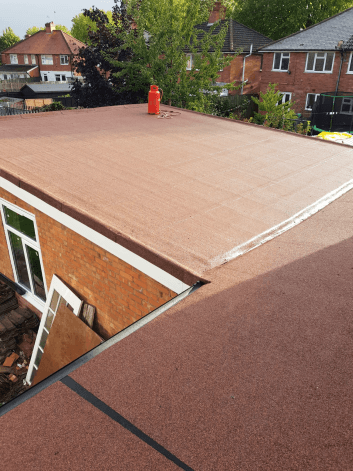
- A flat roof covering that has torn, blistered open or lifted
- Damage from a fallen tree or branch
- Flashing pulled away from a chimney or wall, leaving an open gap
- Loose chimney pots or masonry that could fall
If something is at risk of falling from the roof, keep people and cars away from the area below it until it has been made safe.
What to do while you wait
Move furniture and electrical items away from the leak and put a bucket or bowl under the drip. If water is coming through near a light fitting or the ceiling is bulging, switch off the electricity to that circuit at the consumer unit. Don't go up on the roof yourself, especially in wind or rain. If you intend to claim on your insurance, photograph the damage inside and out, from the ground, before any work is done.
Making the roof safe first
In bad weather a full repair often isn't possible straight away. Wet tiles are unsafe to work on and many materials won't bond in the rain. What we can usually do is a temporary repair: refixing loose tiles, sheeting over a damaged area or sealing an open joint so the roof is weathertight until a permanent repair can be carried out.
We'll tell you clearly which work is temporary and which is permanent, so you know where you stand.
The permanent repair
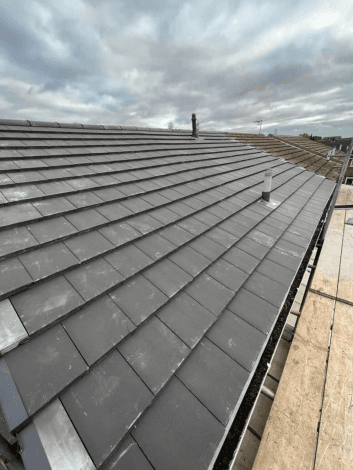
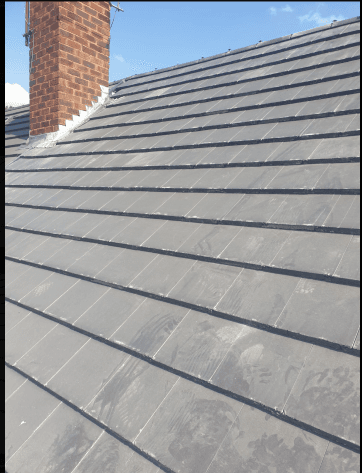
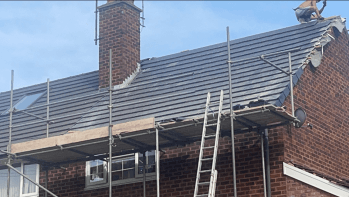
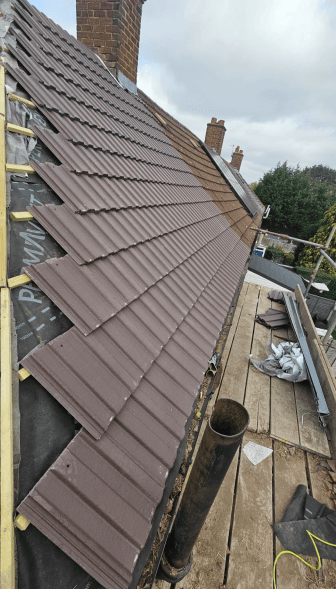
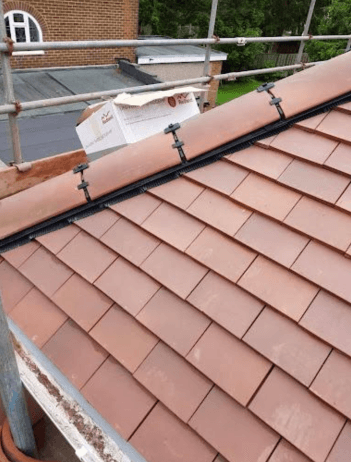
Once it is safe to do so, we come back and fix the underlying fault. That might mean replacing broken tiles and damaged battens, re-fixing a ridge to current standards, renewing a section of lead flashing or repairing the flat roof covering. Where the damage has exposed wider problems, such as a membrane that has failed across the roof, we'll explain the options before going any further.
Storm damage and insurance
Many home insurance policies cover sudden storm damage but exclude wear and tear, and insurers set their own definitions of what counts as a storm. Photographs taken before any work starts help your claim. We can describe what we found and what we did, which you can pass on to your insurer.
Why tiles come off in high winds
Wind damage tends to start at the edges of a roof, at the verges, eaves, ridges and hips, because wind pressure is greatest there. Older roofs where the tile nails have corroded, or where the ridge and verge rely only on mortar, are more vulnerable. BS 5534, the British Standard for slating and tiling, sets out mechanical fixing requirements designed to resist wind uplift, which is why repairs we carry out are fixed to that standard rather than simply re-bedded on mortar.
Emergency roofing across Tamworth
We respond to urgent roof problems across Tamworth, including Amington, Wilnecote, Glascote, Belgrave, Dosthill, Fazeley, Bolehall, Kettlebrook, Hockley, Stonydelph and Two Gates.